
Application-Specific Robotic Gripping
End-of-Arm Tooling for Robotic Palletizing
The right end-of-arm tooling helps a robotic palletizer handle industrial bags, cartons, and other packaged products consistently. Saturn Robotics evaluates gripping solutions as part of a complete palletizing application.
Discuss Your Application →A Critical System Component
Why Gripper Selection Matters
End-of-arm tooling (EOAT) is the interface between the robot and the product. Tooling selection affects how reliably a bag or carton can be picked, transferred, and placed on a pallet.
Packaging material, product weight, shape, stability, surface characteristics, and required cycle time all influence the appropriate gripping method.
Rather than treating tooling as an afterthought, we consider it alongside robot selection, conveyor design, and pallet patterns.
Tooling Selection Starts With the Product
- STEP 01Product & Packaging
- STEP 02Gripping Method
- STEP 03Robot Integration
Every gripping solution must be evaluated against the actual product and operating conditions.
Industrial Bag Handling
Bag Palletizing Grippers
Filled industrial bags can vary in shape, firmness, surface texture, and weight. Gripping solutions must accommodate the packaging and support controlled transfer from the infeed conveyor to the pallet.
Depending on the application, tooling may use mechanical support, clamping, or other purpose-designed handling arrangements. Suitability is confirmed through application review and, where appropriate, product testing.
Explore Bag Palletizing →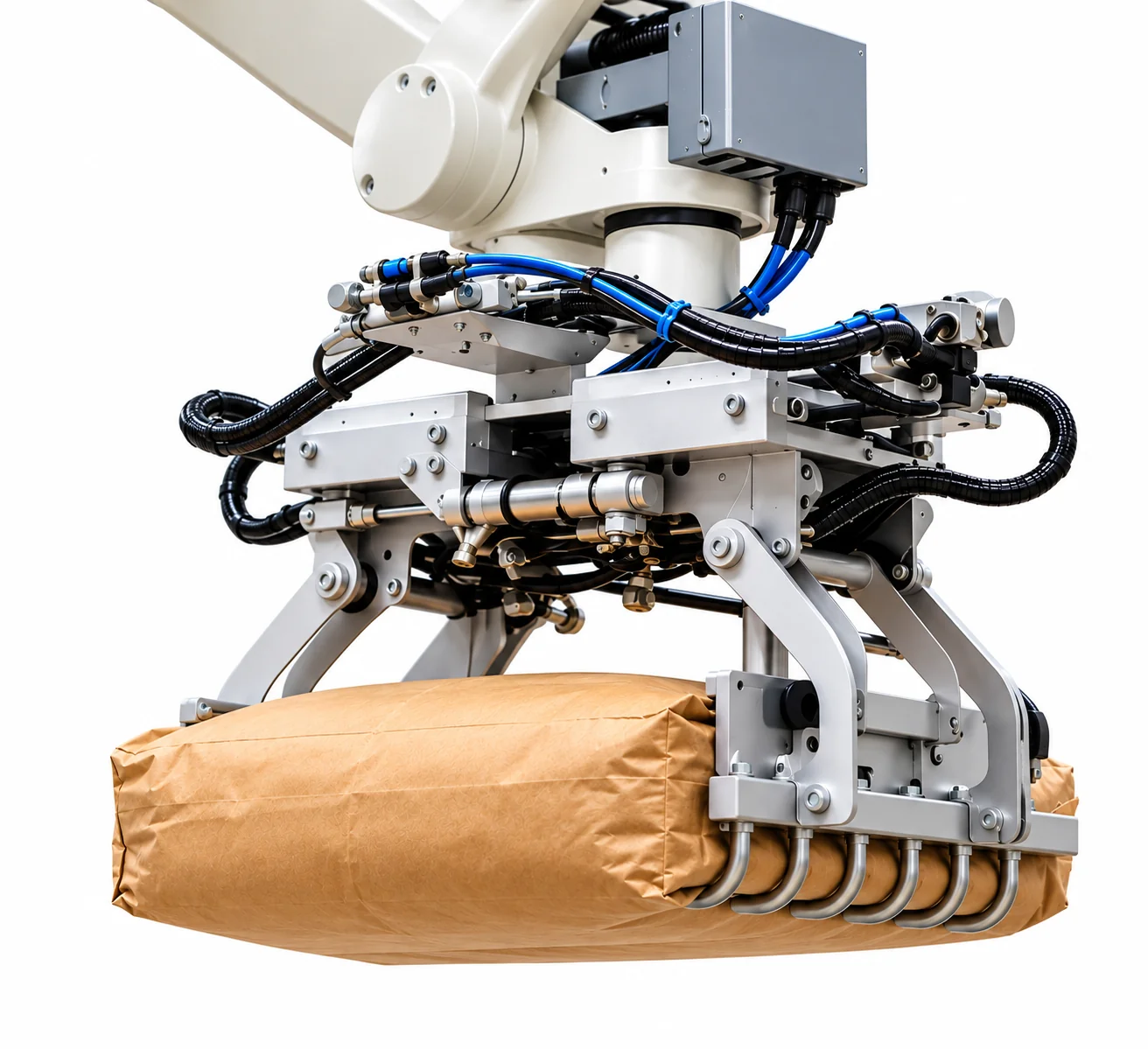
Typical Bag Tooling Considerations
- Bag dimensions, weight, and fill characteristics
- Paper, woven, or plastic bag construction
- Bag orientation and product stability
- Pickup and release requirements
- Target pallet pattern and cycle time
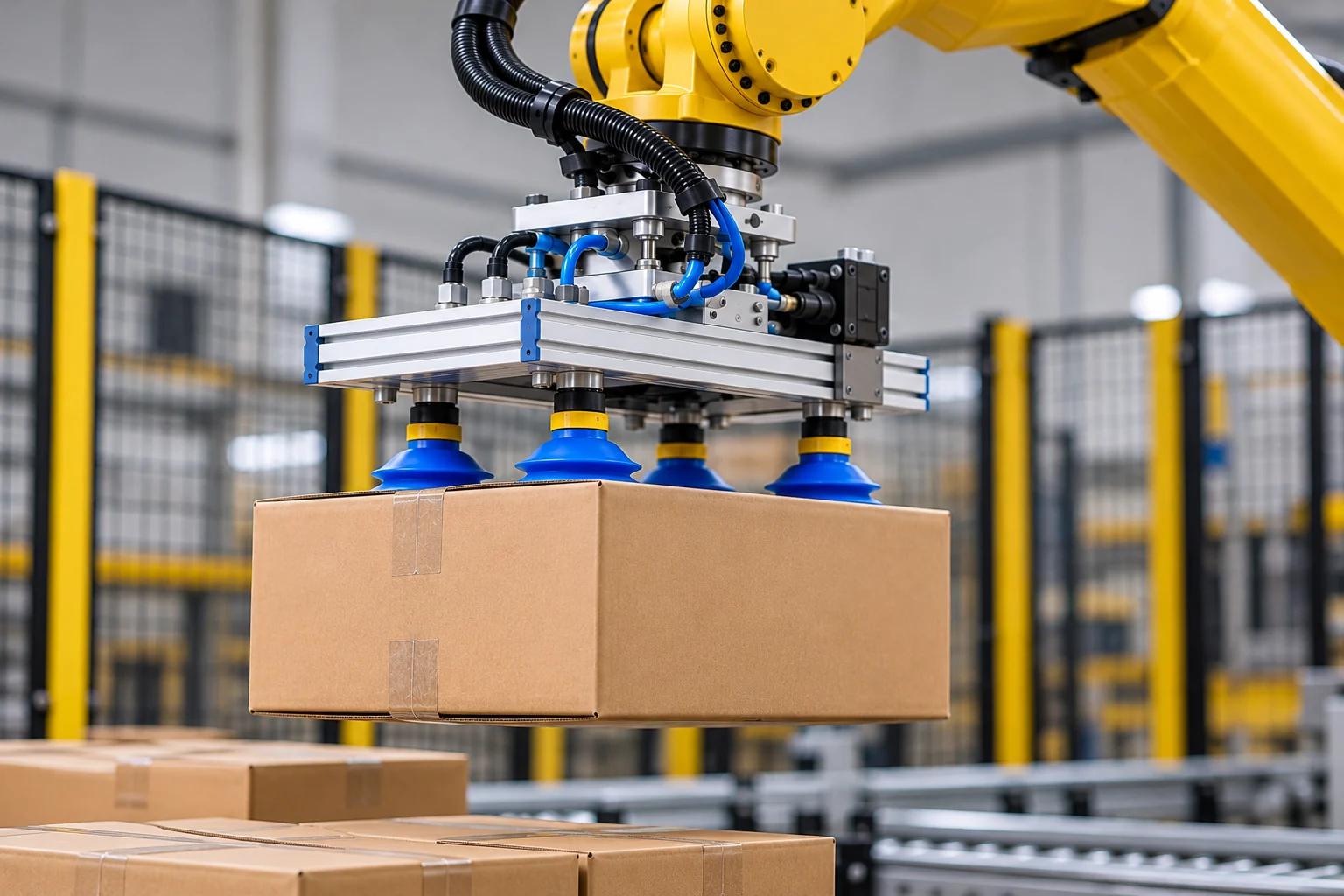
Typical Case Tooling Considerations
- Carton size, weight, and rigidity
- Top-surface condition and seal integrity
- Vacuum suitability or mechanical support
- Single-case or grouped-case handling
- Placement accuracy and cycle requirements
Cartons & Packaged Goods
Case Palletizing Grippers
Corrugated cartons and packaged cases are often handled using vacuum-based tooling, mechanical gripping, or a combination of methods, depending on the product and packaging.
Tooling can be configured around case dimensions, throughput, pallet patterns, and whether the robot handles one or multiple cases per cycle.
Explore Case Palletizing →Engineering Considerations
What Goes Into Tooling Selection?
Successful end-of-arm tooling is selected for the complete application, not just the nominal product weight.
Payload & Reach
Product weight plus tooling weight must be considered within the robot's capacity and operating envelope.
Packaging Properties
Bag material, carton construction, surface texture, and product stability influence gripping choices.
Throughput
Required picks per minute, product presentation, and pallet pattern affect tooling configuration.
Pickup & Placement
Product orientation, conveyor position, stacking pattern, and release behavior all matter.
Utilities & Controls
Vacuum, compressed air, sensing, and robot I/O requirements are coordinated with system design.
Maintenance Access
Wear parts, cleaning, adjustments, and accessibility are considered for practical day-to-day operation.
Integrated Palletizing Solutions
Tooling as Part of the Complete System
End-of-arm tooling works in coordination with the robot, infeed conveyor, pallet handling equipment, guarding, and control system.
Saturn Robotics considers these interfaces together when evaluating a turnkey palletizing installation, helping align equipment selection with production requirements.
Explore Complete Turnkey Systems →One Coordinated Palletizing Cell
Product infeed, robot motion, gripper actuation, pallet positioning, and safety functions must work together as an integrated process.
Final equipment and tooling selections depend on the application and agreed project scope.
Discuss Your Handling Requirements
Need the Right Gripper for Your Product?
Tell us what you're palletizing, the product dimensions and weight, packaging type, and required production rate. We can discuss tooling options as part of your robotic palletizing project.
Request a Quote →